Showing posts with label the realness movement. Show all posts

2.3.10

"The adult industry is changing, and people are going to have to be progressive—and if they're not they're going to fail." - Sasha Grey (RM part 5)

The adult entertainment industry is the subject of the fifth and final installment of the realness movement analysis. The realness movement in this industry has not manifested itself as much as in the fashion, music, photography and modeling industries that were analyzed in the previous four entries, however, with the rise in popularity of porn stars such as Sasha Grey and Faye Reagan as well as erotic magazines such as Jacques and S magazine there still has been a shift towards depicting a realer side of adult entertainment. Yes, porn stars that resemble Jenna Jameson and magazines such as Maxim are still the norm but a niche market has developed that favours more natural looking porn stars and more stylized skin magazines. Although adult entertainment is considered by some to be a controversial topic this industry is prevalent in our society whether it's out in the open or not and the development of the realness movement would not have been complete without bringing the adult entertainment industry into the picture.

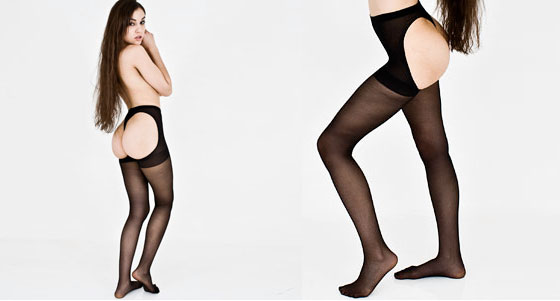
Sasha Grey has received quite a bit of media coverage in recent times. She has appeared on the Tyra Banks show, in American Apparel advertisements, in Steven Soderbergh's film The Girlfriend Experience, in magazines such as VMAN and she has had several speaking engagements at colleges including UCLA. If you read or watch an interview with her she is poised and articulate, mentioning Godard, Nietzsche and Baudrillard along the way. Although Faye Reagan may not be considered an intellectual porn star like Sasha Grey she has also appeared in American Apparel advertisements and graced the pages of Paradis magazine, garnering her some attention in more mainstream press. Career accomplishments aside, Sasha Grey and Faye Reagan have both become popular because of their naturally beautiful physiques. They're both attractive women that don't seem to wear a lot of make-up. The average porn star looks like a real-life barbie doll with piles of make-up on her face and surgically enhanced breasts. In other words, they look fake. Sasha Grey and Faye Reagan have decided to go for a more natural look. For example, Sasha Grey has small breasts and Faye Reagan (pictured above) doesn't try to conceal her freckles. These aren't physical traits that you would normally associate with porn stars. However, viewers find this refreshing. It's by embracing their real looks that they are differentiating themselves and creating a new image. It's about time the pornography world experienced a change of direction.

There's also a niche market that is championing a return to classic erotic magazines. Jacques magazine seems to be garnering the most attention at the moment. The self-proclaimed only new luxury erotic magazine in America prides itself in "...illustrating the real beauty of real women." (Jacques magazine website) The publication abides by a strict no airbrush policy differentiating itself from the big players like Nuts in the UK. Their photoshoots depict women of all shapes and sizes. Even the Editor-In-Chief strips down for her photograph, showing that she wholeheartedly believes in the product. S magazine has also been getting a lot of attention by creating a bi-annual erotic/fashion magazine. The magazine consists of tastefully photographed real nude women. Another magazine worth mentioning is Paradis magazine. This men's magazine is much more progressive and contemporary than the average men's magazine, mixing interviews with artists such as Damien Hirst with editorials by Juergen Teller with nude pictures of model Daisy Lowe and the previously mentioned Faye Reagan. To a certain extent, even Playboy has been targeting this niche market. The recently launched Playboy France is much more classy, sophisticated and stylish, reminiscent of the Playboy magazines from back in the 60s or 70s. The October 2008 photoshoot with Lily Cole is a direct reference to this iconic magazine's past. These magazines are getting good press because they're branding themselves in a different way and therefore distancing themselves from the sleezy men's magazines we're used to. They've gained credibility and a certain acceptance by portraying real and naturally beautiful women in an artistic yet erotic manner. As Cayte Grieve stated in Blackbook, these publications are blurring the lines between art, eroticism and pornography.

As the popular saying goes: "sex sells" but it doesn't mean that we have to sell sex in a sleezy and dirty way. This may sound cliché but sex is a beautiful thing. So why not portray it in an organic, natural and real way? This is obviously a question that the previously mentioned porn stars and erotic magazines have asked themselves and they've decided to do something about it. The realness movement is helping the adult entertainment industry become more tasteful, stylish and sophisticated and therefore more respected in mainstream culture. They've done all of this by going back to the basics: getting rid of the unnecessary touch ups, embracing models' natural beauty and depicting realistic settings. Who knows, maybe with the proliferation of porn stars and erotic mags such as these, adult entertainment will one day become more openly accepted in society.

26.2.10

"No one wants a beautiful woman or a beautiful man anymore." - Kelly Cutrone (RM part 4)

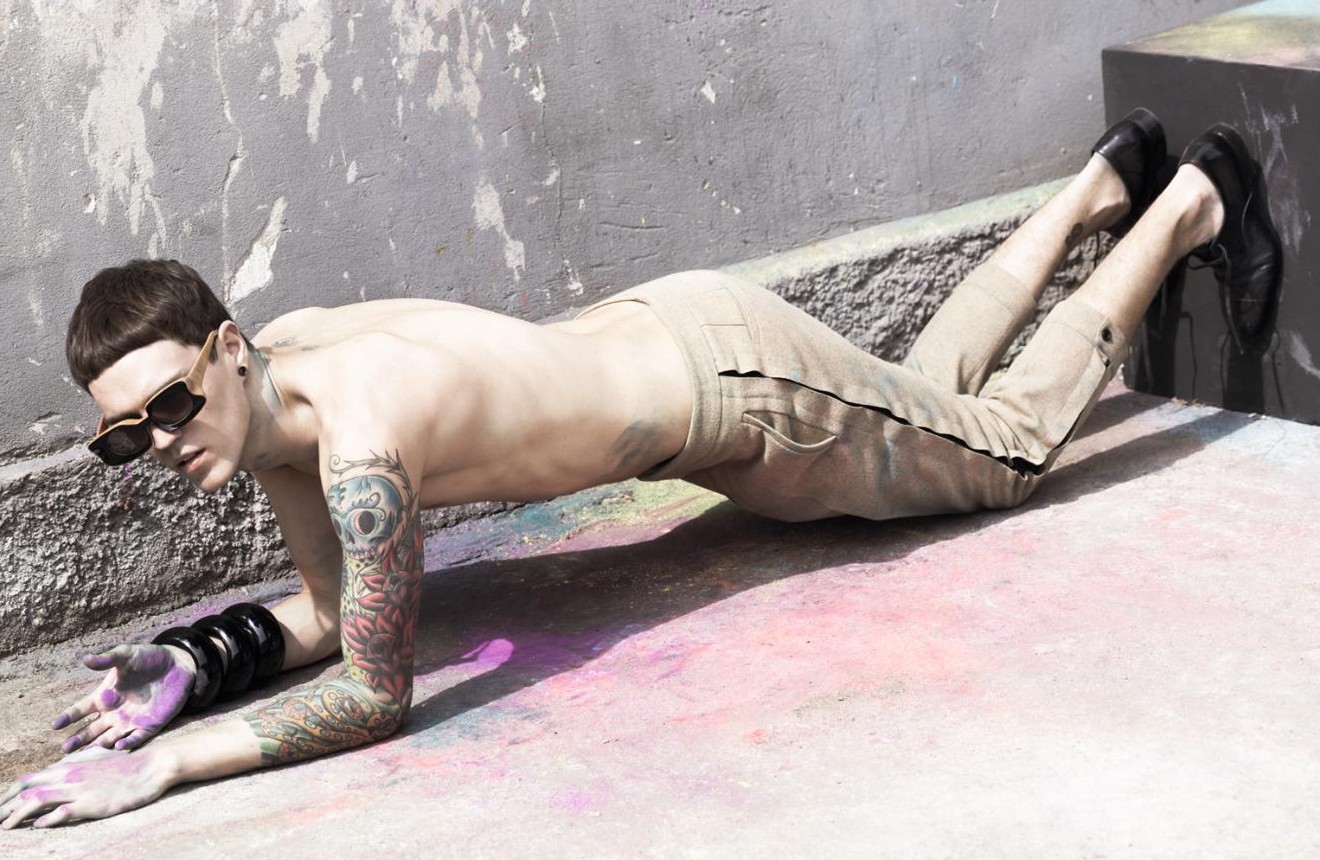
The average person probably thinks that male models are muscular, tall and attractive. Two of the three descriptions are accurate however today's ideal male model is definitely not muscular. The fashion and modeling industries experienced a drastic shift in demand at some point in the early 2000s. The male models du moment are skinny, lean and even tattooed. Gone are the days of the male models with movie star looks and porn star physiques. The skinny types are giving the beefcake types a run for their money. Models such as Cole Mohr, Josh Beech, Tyler Riggs and more recently Jethro Cave and Ash Stymest are leading quite successful modeling careers thanks to their lean figures. This new silhouette represents the realness movement in the male modeling industry.

Models with god-like physiques were the norm in the modeling industry up until the late 1990s. The faces of brands such as Dolce & Gabanna and Calvin Klein all had chiseled bodies. If you didn't have a 6-pack and great pecks you could forget about modeling all together. However, the consumers and eventually, the fashion world, got disenchanted with this overly masculine image. In the early 2000s, it was time to reinterpret and redefine societies' notions of masculinity. Male models started getting skinnier and skinnier. Some critics even thought that companies were going too far and promoting a stick figure or scarecrow physique. Whatever your opinion may be, the fact of the matter is that the men's fashion world shifted towards a more raw and realistic look. These boys were naturally good-looking and thin, demonstrating that you didn't need to go to the gym to be attractive. Consumers could relate to these models and this partially explains the reason why this trend caught on.

Hedi Slimane the ex-designer of Dior Homme was one of the first to promote the skinny look in men's fashion. He was making slim fitted, tapered clothing and therefore wanted thinner models to suit his aesthetic. He couldn't always find the type of model he was looking for at modeling agencies so he started conducting street castings. Many of the models in his shows and campaigns are boys that he discovered himself during his travels. Its thanks to these street castings that he was able to find real skinny punks to create a new look in the menswear industry. This brought authenticity to the fashion world. Modeling agencies quickly started scouting and signing skinny boys as well as promoting them to their clients. As Guy Trebay explains in The Vanishing Point article he wrote for the New York Times: "Within a couple of seasons, the sleekness of Dior Homme suits made everyone else's designs look boxy and passé, and so designers everywhere started reducing their silhouettes." Hedi Slimane's influence on the male modeling industry continues to this day, even though he has not designed a collection since 2007.

The "it" male models all have a punk and somewhat androgynous look. They embody the energy and rebellion of youth. They all have tattoos on their bodies and Ash Stymest as well as Josh Beech have gauges in their ears. They have an "I don't give a fuck" rock n' roll attitude. This punk rock model look has also spilled over to the womenswear market. Alice Dellal and Tasha Tilberg are both examples of female models that have become well-known for their edgier looks. Alice Dellal sports a partly shaved hairdo and they both have nose piercings and tattoos. This group of models has taken the fashion world by storm and the fashion world can't seem to get enough as they have appeared on countless magazine covers, in campaigns and in editorials.

The raw, skinny and edgy punk rock aesthetic in the modeling industry is yet another manifestation of the realness movement in the creative community. Dirty, slim and rough is in. Clean, muscular and handsome is out. At the moment, consumers don't want to look at advertisements portraying fantasy male models with physiques that are unattainable to most. They want something that is more realistic and that's what these models represent: reality. Although there is a lot of effort put into creating and maintaing this look, the punk/skinny aesthetic gives the consumer the impression that these models are effortlessly living their lives, one day at a time, without a care in the world. It's an alternative to the clean-cut, muscular male model image that was dominant in the past. In an industry that's known for pushing boundaries this change was necessary.

17.2.10

“I would just have this one little camera and show up at a shoot and people would be like: “where’s the equipment?”” - Terry Richardson (RM part 3)

The snapshot aesthetic is the best representation of the realness movement in the photography industry. It became a dominant form of photography in the 90s and continues to be popular today, especially amongst youth culture. Magazines such as Vice, The Face, i-D as well as clothing companies such as Marc Jacobs, Sisley and even American Apparel have all used this style of photography to promote their brands. Prior to the snapshot aesthetic's rise in popularity, photography was too impersonal and detached from everyday life. Photographers were depicting surreal models in unrealistic settings and situations. The point and shoot style of photography went against this trend by portraying subjects in a more intimate and personal manner. Terry Richardson, Juergen Teller, Wolfgang Tillmans, Diana Scheunemann and Ryan McGinley are all examples of photographers who have contributed to making this aesthetic more accepted in mainstream photography. They are the ones representing the realness movement in the photography industry.

For a long time the imagery found in advertisements, editorials and other visual media often depicted fantasy worlds. The models were portrayed as god-like creatures living in perfect environments. This advertising strategy was employed to create an aspirational image. In other words, by wearing a certain brand the consumer will be, in this case, seductive. This strategy is still used today however certain brands have decided to shift their image from a glamourous one to a more realistic one. Certain consumers got sick of constantly aspiring to own specific products that they could never actually own. They realized that they were never going to be like the models in the images they were being exposed to. These images ended up being perceived as unrealistic and unattainable by the average consumer. The point and shoot style of photography allows the consumer to relate to the images being shown. It is more immediate, more energetic and more personal. It brings accessibility into the equation since there's more interaction between the photograph and the viewer. The photographs don't seem like they have been retouched, the models' imperfections are noticeable and the settings are realistic. It's sexy, fun and raw. It's this intimacy that attracted and still attracts people to this sort of "natural" or "organic" photography.

When talking about the manifestations of the realness movement in photography there is no way of getting around Terry Richardson. He almost single handedly brought the snapshot aesthetic to the attention of the mainstream market during the 90s. However, it was difficult for him to launch his career. Showing up to a professional fashion photoshoot with a point and shoot Yashica T4 camera isn't exactly what you would expect from a photographer who was hired to oversee a campaign or editorial spread. He obviously got criticized for using amateur equipment but the visual results quickly shut his critics up. The snapshot aesthetic eventually caught on and Terry Richardson accurately describes the reasons for this in an interview during the Belvedere vodka campaign shoot:

"[With regards to] my aesthetic...it's much more immediate, and it has an energy to it...I think that that's what people, now more so, they look at a picture and if there's energy, there's some sexiness or something they like about it, it appeals to them...it's an energy people respond to, they want to be part of it or they like the way someone looks, and that's on a more human level, I think that advertising was really detached for a long time, it had nothing to do with how people see things, they sought to make it this fantasy, special, almost unobtainable object. To me, with the whole snapshot thing, it's just human, it's personal and I think people respond to it."

By following these beliefs his photographs have appeared on countless magazine covers, in editorials, in campaigns, on pop stars' album covers and in addition to shooting the previously mentioned Belvedere vodka campaign he has also recently shot the infamous Pirelli calendar, solidifying the point and shoot aesthetic's place as one of the dominant forms of photography.

Even American Apparel adopted Terry Richardson's style of photography. Their advertisements are directly influenced by the snapshot aesthetic. It's in large part due to their campaigns that the brand has become so successful. Consumers relate to the models in the shots because the pictures look like they could have been taken by the viewer. The models aren't even models, they're usually employees or so-called "real-life" models. Again, the pictures are personal, raw and usually sexy. They don't hide the subjects' flaws. They don't seem to have gone through hours of retouching in photoshop. American Apparel was one of the first mass market clothing brands to use this style of photography in its advertisements therefore it was new to consumers and helped them differentiate themselves from the competition.

The Marc Jacobs brand has also profited thanks to the snapshot aesthetic. Marc Jacobs' longtime collaboration with Juergen Teller has created unique advertisements that consumers can immediately recognize without even seeing the company's name. The photographs are fun, energetic and raw. Past campaigns have included Harmony Korine eating at a restaurant, Ryan McGinley taking a bath and Victoria Beckham’s legs popping out of a Marc Jacobs bag. They have chosen not to always use professional models. Yes, these subjects are famous in their respective industries but these images show them in a different light. In a way, the photographs bring them down to our level. The consumer can relate to them more since the campaigns make them look like everyday people by depicting them in banal/normal settings.

Prior to the likes of Terry Richardson and Juergen Teller entering the photography industry the snapshot aesthetic had never been valued highly. It was perceived as unprofessional and crude. However, it revolutionized the photography industry by incorporating elements of intimacy and reality and this, in a way, democratized it. The point and shoot aesthetic demonstrated that there wasn't one best kind of photography. These "realness movement" photographers made the photography world more accepting of their "natural" photography and showed that they also deserved artistic merit. The fact that this type of photography has remained quite popular during the last 15+ years attests to the fact that it has become an important part of the photography industry. Longevity is an important indicator of any true artistic movement and I don't see the snapshot aesthetic disappearing anytime soon.

11.2.10

"When you drape your music in effects, it actually undercuts the music itself." - Bob Lefsetz (RM part 2)

The late 90s and 2000s gave us mainstream acts such as Britney Spears, Blink-182 and 50 cent. Although these acts belong to different musical genres they all reflect the state of the mainstream music industry during the past decade or so. For the past ten years music has been too polished and overproduced making a lot of acts seem repetitive and bland. As a result of this, certain music fans started searching for something else. The musicians they discovered were individuals who created music with very little means. These artists were demonstrating that you didn't need the newest instruments, proper equipment or state of the art recording facilities to make records. Their reason for being was to create records that were different from what was being played in the mainstream and the difference was their lo-fi sound. Lo-fi music has existed for awhile now but this genre is currently experiencing a resurgence. Bands such as Wavves, A Grave With No Name and The Bitters (to name a few) have been getting their first tastes of success. These lo-fi bands are at the forefront of the realness movement in the music industry.

As during most periods, there are a lot of overlapping elements between the fashion (which I mentioned in my previous entry) and music scenes of the late 90s and 2000s. In this case, both of these scenes were overly glamourous and polished. Musically, the pop artists from this era all created music that was layered in unnecessary effects. When it comes to their image, pop acts such as Britney Spears are made up of plastic dolls that do everything they are told, pop punk acts such as Blink-182 are promoting the "punk" way of life while touring in luxury buses and living in mansions and hip pop acts such as 50 cent are trying to play-up the "gangster" (sorry, "gangsta") image while spending too much time smoking weed, insulting rivals in safe interview settings and carrying guns for show. Unfortunately, the mainstream music industry hasn't stopped promoting slightly updated versions of the previously mentioned pop acts but at least this has motivated a new generation of musicians to create more authentic music.

Lo-fi music is defined as "the production or reproduction of audio characterised by an unpolished or rough sound quality." (merriam-webster) Bands searching to create a lo-fi sound pride themselves in making music with very limited tools at their disposal. Wavves started making music in his bedroom using Garageband. The members of A Grave with No Name record in friends' bedrooms if they can't record in theirs. They are making music out of love and are willing to sacrifice a lot to get their music out there. They'll tour endlessly in shitty vans, play in dive bars/clubs and sleep on couches. To a certain extent, it's become cool to do this. As Ben Cook from the Bitters explained to dazeddigital: "I guess even more so now people aren't paying attention to ANYTHING that sounds like it could be played on a radio station. The more shitty and obscure, the more elite and rad you feel, right?" But this doesn't mean that everybody and anybody can produce good lo-fi music. Ben continues by stating that "...the availability of low budget recordings only sets apart the true songwriters from the bored kids with a laptop." You still have to have talent to make lo-fi music.

The lo-fi sound is fuzzy, distorted and rough but underneath it all you will find good melodies and songwriting. That's why it's appealing. It still is good pop music but lo-fi musicians decide to record it in a minimal way. Take Wavves, for instance. So Bored and No Hope Kids are feel good tunes that are extremely catchy. They're simply dirtier and more abrasive pop songs. Lo-fi musicians, like Wavves, are stripping their music down. Keeping it simple. Taking away the extra layers of production. These bands make the best of the few tools they have. In a way, they are showing the world what the music making process used to be like. Lo-fi music is bringing it back to a time when music was raw, natural and organic. A time when the magic happened when you were physically playing your instrument. Not in post-production. In this sense, they are helping make "real" music again. It's for this reason that lo-fi music has reached a popularity level unseen since the days of Sebadoh and Pavement.

The musicians creating lo-fi music today are offering an alternative to young music goers who are fed up with the music promoted by the mainstream media. The fans and bands alike are indirectly rebelling against the mainstream music industry. They want to create and support music that isn't perfect. By stripping down the layers and keeping it raw and simple there's a certain energy to it that you don't often find in mainstream music today. It seems more personal, more honest and more believable. I know that I've used the word "real" a lot and you're probably getting sick of it by now but that's the simple word that fans need to associate with your band in order for you to be successful. And although it's a simple word, it's not a simple concept to grasp. There's no formula for it. It just happens. The best chance you have to be perceived as "real", is to be true to yourself. More specifically, let your music speak for itself because at the end of the day that's all it comes down to.

25.1.10

“I think fashion is a reflection of the times...” - Mr. Miljanic (RM part 1)


In the late 90s and early 2000s, the fashion industry was decadent, glamourous and sexual. It was during this period that modern day celebrity culture exploded. Metrosexuality became a significant trend. The whole rock fashion scene was diluted because of lame pop punk styles. Girls were imitating the dress of the "sexy" female pop stars. And the hip hop (or hip pop) culture emphasized a "baggy" clothing style. These looks were inauthentic. They were over-the-top, exaggerated and fake. In short, the fashion world completely lost touch with reality. Luckily, certain designers are helping to bring this disconnect from the real world to an end. The last few seasons have been dominated by looks that are both counter reactions to the previously described trends as well as reflections of the social, political and economic events that have taken place during the last ten years. The mixture of these factors allowed for the creation of raw, rugged and authentic fashion. Fashion that I deem part of the realness movement.

The first decade of the new millennium was a time of disruption and chaos. On a social level, the September 11 terrorist attacks in the United-States, the 2004 Madrid train bombings and the July 2005 London bombings, created an atmosphere of fear and uncertainty throughout the world. They also brought attention to the social injustice and disparities that exist in the international sphere. On a political level, the world had to endure George W. Bush's eight year term as the leader of the most powerful country on the globe. The Iraq war, carried out mainly in response to the terrorist attacks in New York City, became highly controversial and demonstrated that the US army wasn't as morally superior as its citizens first thought. Incidents such as the one that took place in Abu Ghraib, severely tarnished the USA's reputation and lead to many citizens questioning the American identity. Lastly, on an economic level, the financial crisis that started in 2007, but hit hard in 2009, further enhanced the sentiment of uncertainty due to companies going out of business, an increase in unemployment rates and an overall decline in wealth.

Considering the state of the world during this period, people gravitated towards two styles to express their thoughts and feelings. They either sought comfort and decided to go for an "americana" look or they sought rebellion and decided to go for a "dark punk" look. During uncertain times, we naturally want to go back to what we know, to what we feel comfortable with and to what has stood the test of time. Americans were not happy with the American identity portrayed to the world during the first decade of the 2000s. The United-States' foreign policy brought Americans a lot of criticism and, in certain instances, hate. In response to this general sentiment, certain designers decided to rediscover America's roots. They wanted to look back at the glorious past American identity, one that had strong values and morals. These designers wanted to reintroduce the good, honourable and hard-working American image. As the designer of Gilded Age accurately told the New York Observer: People "...seek things that are known and recognizable, that are part of their past. [Currently] There's something in the air that tells us to look at our values and consider what is truly American." Consumers need a boost in confidence during difficult times. They feel the need to take control, as America's founding fathers (who built the country and created the American dream) did a century before them. Men wanted to feel masculine again. They wanted to grow up. To escape their protected and domesticated lives and rediscover the USA's past work ethic. Labels such as Our Legacy, Engineered Garments and Albam are all examples of brands that are allowing the modern man to express these views by re-interpreting americana/workwear inspired classics.

Recently, heritage and heritage inspired brands have experienced a strong resurgence in popularity. They have lead the shift in the men's fashion market towards a rugged yet sophisticated look. Gone are the days of clean metrosexual outfits, fake pop punk styles and oversized hip hop gear. Men now want clothes that are more rugged, authentic and fitted. Most men own at least one plaid or checkered shirt, reminiscent of lumberjacks. Chambray and denim shirts are also making a comeback and reflect the blue-collar or working-class lifestyle. In addition, fashion connoisseurs are wearing Red Wing boots that were "...born of the necessity brought forth during the industrial revolution." (Inventory magazine) They are even going as far back as the pre-industrial period and wearing mocassins by brands such as Quoddy. This type of footwear was worn by the first settlers, therefore it reconnects the wearer with the USA's past. The United-States needs to experience a rebuilding process because the country's image has been damaged by eight years of the Bush administration. Designers and fashion conscious consumers are communicating this feeling along with their ideals through their choice in clothing.

The other design trend created by certain fashion designers didn't look as far back in time for inspiration and was much less constructive. These designers were directly influenced by the punk and hardcore punk movements of the 70s and 80s as well as the goth subculture from the 80s. This trend is harsher, more aggressive and more rebellious. Fashion connoisseurs who adopt this darker look see it as a way to say "Fuck You!" to George Bush and the evil multi-national corporations that caused the current economic crisis. It's a way for them to rebel against the system. The punk movement of the mid-70s and the hardcore punk movement that followed in the 80s, were all about that. They fought for individual freedom and had anti-establishment views. True punks (we're not talking about the pop punk fans here) were largely anti-capitalists and non-conformists. They expressed this by wearing ripped clothing attached together with safety pins or by wearing t-shirts with slogans written in marker or paint. Punks were preoccupied with political conflicts, social injustice and economic disparity. Issues that are once again at the forefront in today's global environment. Goths may not be as rebellious on a political level, but they do attach a lot of importance to mood in their aesthetic. The dark colour palettes that are used by certain designers, can be seen as a reflection of the dark times we are living in. The last ten years have been a sombre époque and certain fashion brands are reflecting the overall mood of this period through their choices of colour. Whether or not brands such as Gareth Pugh, Julius or Odyn Vovk openly admit to these movements having influenced their work, they have created an edgier, darker and more authentic look in the fashion world. Studded leather jackets, gothic jewelry, doc martens and ripped black basics have all become more popular. This look makes a statement about the first decade of the 2000s. It's a visual sign of rebellion and critique.

Fashion has always been a tool for self-expression. Some people decide not to utilize it but others see it as an opportunity for social commentary. Before these two trends were pushed forward by creative directors searching for more realistic design in fashion, there were no labels truly reflecting the present times. Mainstream culture was promoting an overtly sexual look. Designers of the realness movement responded to this by going for a more rugged and/or edgy look. Whether consumers chose to adopt the "americana" look or the "dark punk" look, they were choosing not to have a sexy image. Although both of these fashion trends expressed different feelings they shared the same message, one of discontent with the past fashion trends as well as with the social, political and economic conditions of the first decade of the new millennium. Some say that these two trends are coming to an end, which has to happen for fashion to evolve, but let's just hope that no matter what the next trend is, that it remains authentic and real.

17.1.10

"The reality of his situation slowly dawned on him" (RM introduction)

In the last few years there has been a movement developing that champions a return towards portraying things in a real, raw and natural way. A return towards reality, if you will. This movement has finally reached the mainstream market but before it dies out I would like to take the time to showcase how this movement has manifested itself in different industries. I have decided to call this movement "the realness movement". In the past, consumers were over-saturated with images that were pure fantasy and unrealistic. Portraying dream worlds in the media doesn't appeal to the general public anymore since we can't relate to it. Consumers don't aspire to live unattainable lifestyles because they are, well, unattainable. I believe that a significant group of people in our society reacted to these false depictions of everyday life by deciding to portray things in a more realistic manner. None of this glamourous, fake, tacky nonsense. Fantasy is dead, now back to reality.

The realness movement was a direct result of the unrealism that permeated the arts and media in our society. Fashion was too glamourous, music was overproduced, photography was too impersonal, models were too god-like and porn stars were too fake. Certain creatives in these industries decided to challenge the norms. They took it upon themselves to initiate a shift in the market by producing work in such a way as to reflect more realistic lifestyles. The strategy they adopted was simple: back to basics. They decided to strip things down and rediscover the beauty of simplicity. This trend can be found in the fashion, music, photography, modeling and adult entertainment industries. In each subsequent entry, I will attempt to analyze the manifestations of "the realness movement" in these five industries.